Deer Fencing and Netting, Franklin
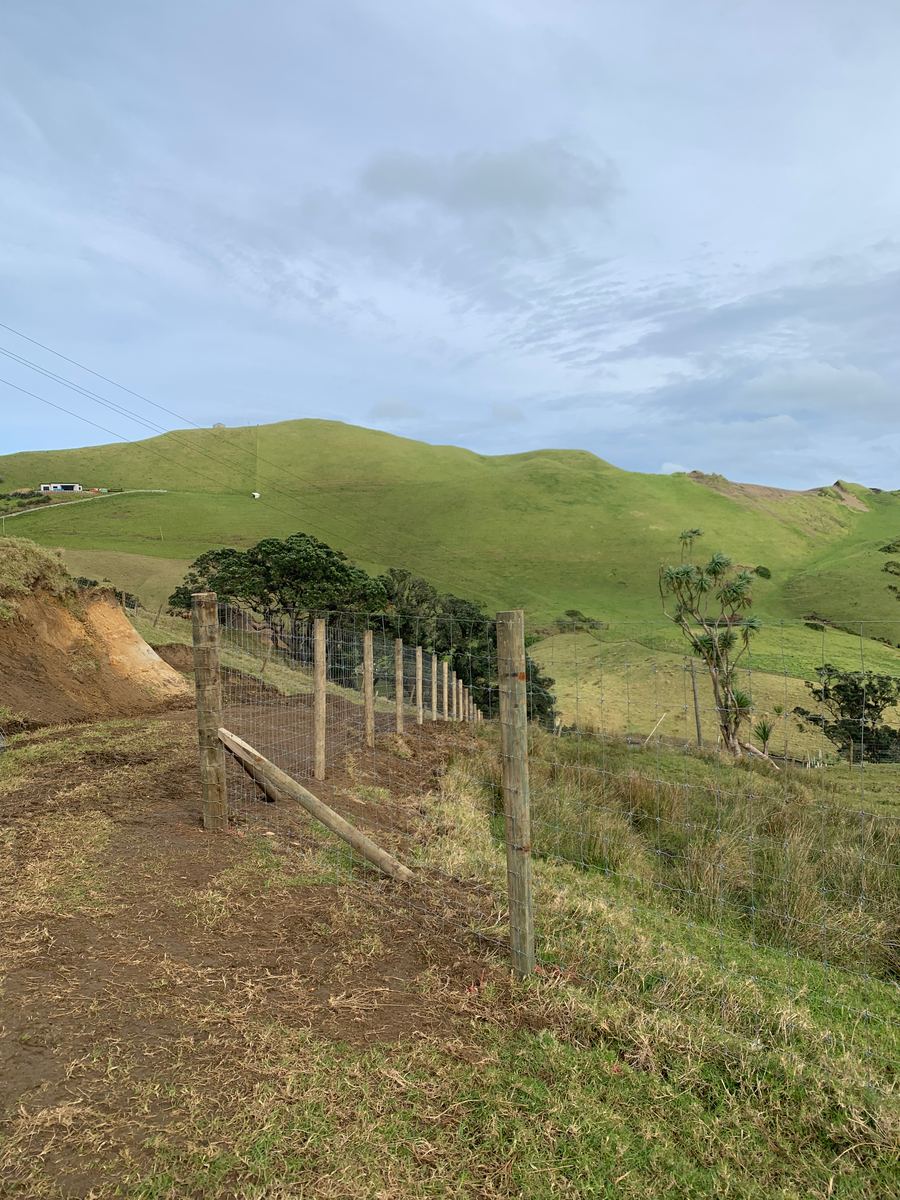
Tall posts and deer netting that hold up steep faces and along gully edges. Posts go in by tractor, and netting is strained tight to the ground.
- Farm fencing contractor
- Yards, rail, wire and netting
- Since 2021
- Family owned
- Pukekohe-based
- Franklin and North Waikato
- Free quotes
- Line walked first
 Deer · netting
What to tell us about your deer fence
- Deer, or keeping stock out of bush or planting
- Rough metres, and how steep it is
- How your line is reached
- Gates you need
Holding deer in
Deer test a fence harder than any other stock. They jump and push at the bottom, and they find any spot where netting lifts off the ground. A deer fence has to be tall and tight, and close to the ground all the way along.
We put up deer netting on tall posts for deer farms and for blocks running a few deer, and netting to keep stock out of bush and new plantings.
Netting earns its keep on blocks with no deer at all, too. It keeps cattle and sheep out of a bush remnant or a new planting while it gets away.
Steep faces and bush lines
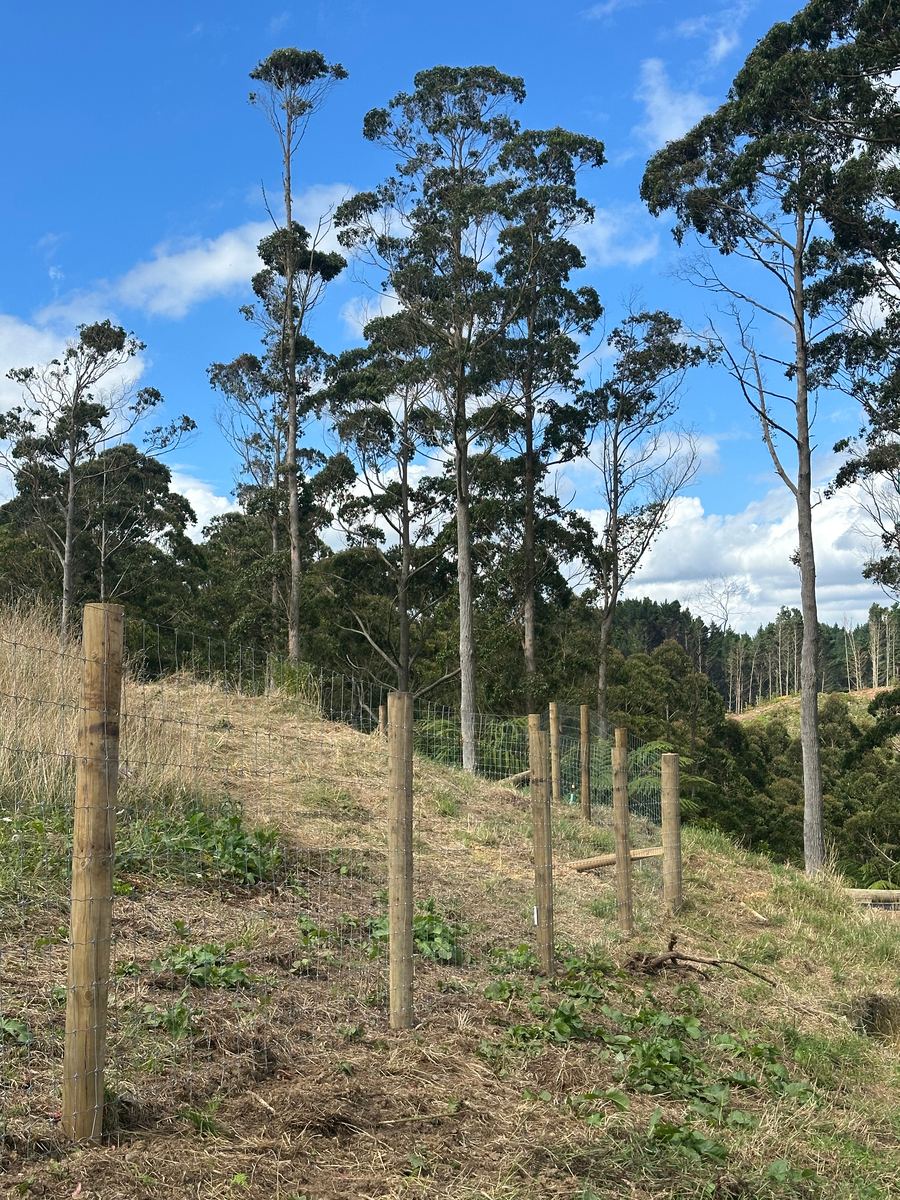
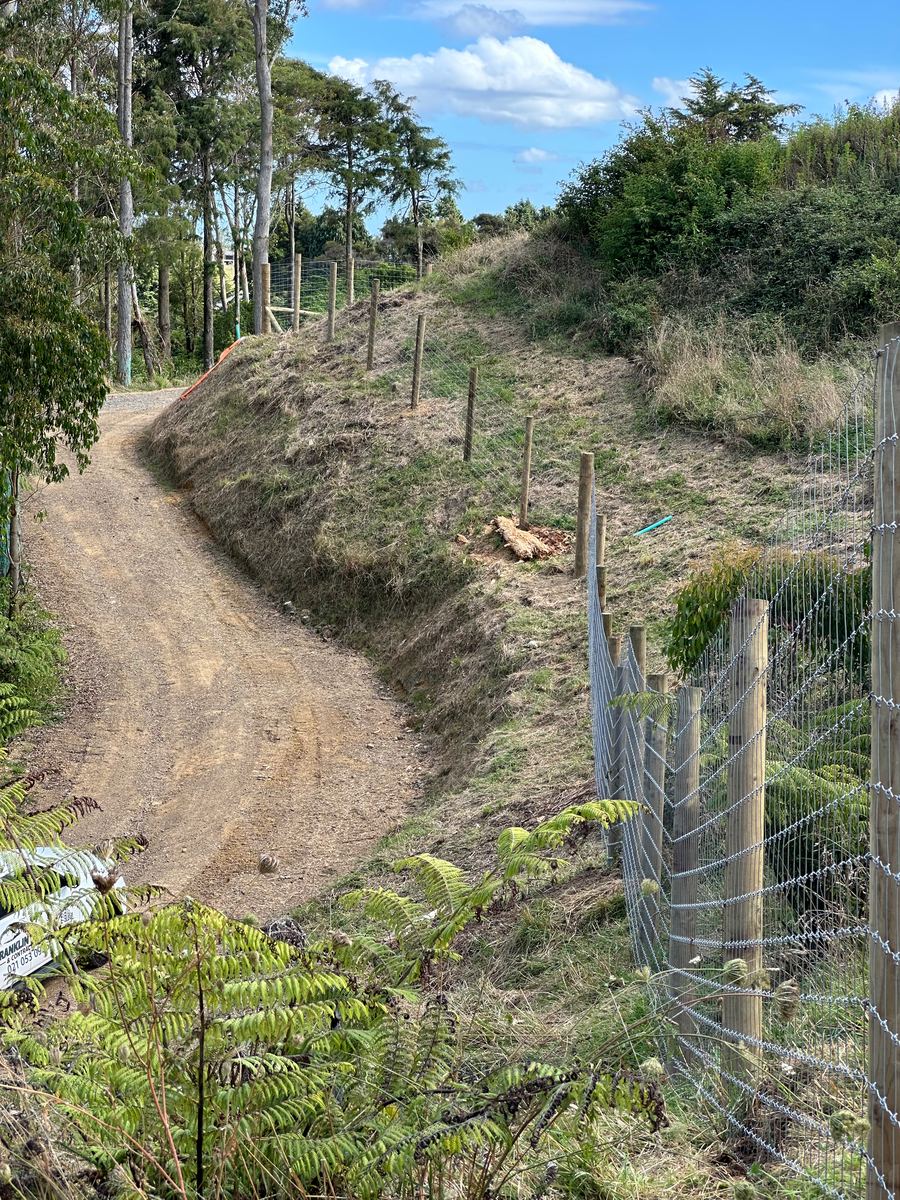
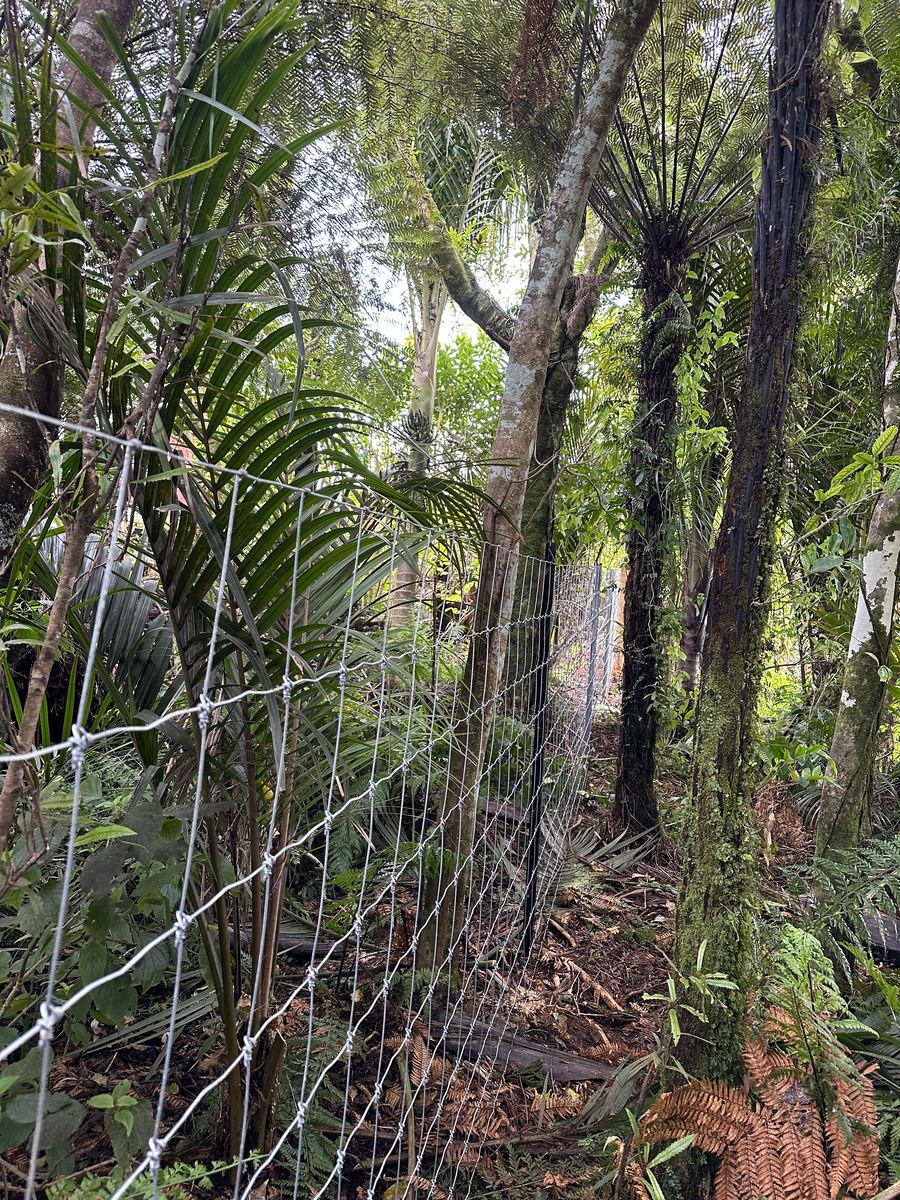
Deer fencing often runs up steep faces and along the bush edge, where your line is hard to reach and ground keeps changing. Dylan walks it first and picks a line. Netting then follows your ground, with strainers where they’ll hold.
Posts and strainers are rammed in with the tractor, and the netting is strained tight between them.
Deer near water
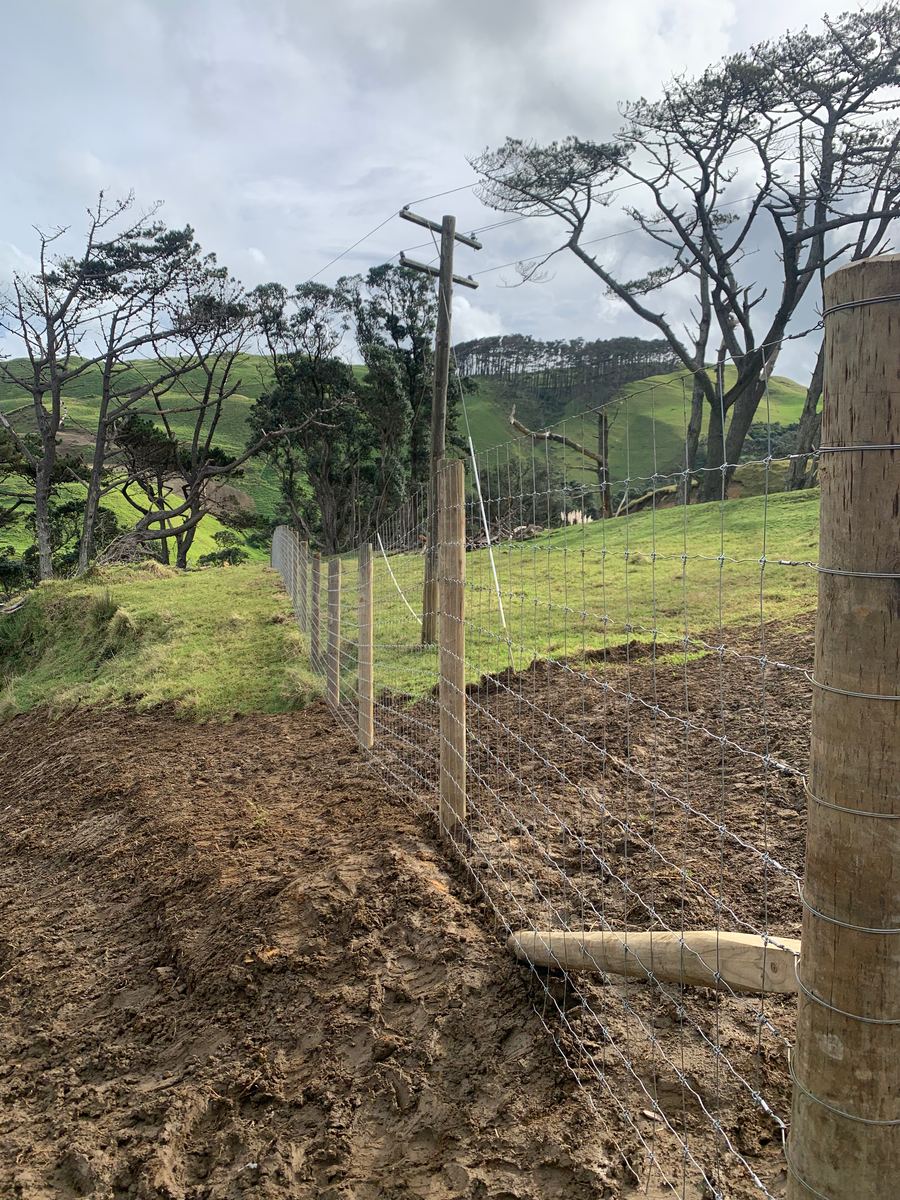
Deer that are intensively grazed come under national stock exclusion rules near lakes and rivers wider than 1 m, and a deer fence counts as a permanent fence under those rules.
If a stream or a wet gully runs through your deer block, mention it in your message so your line can keep them back from it.
What the customer said
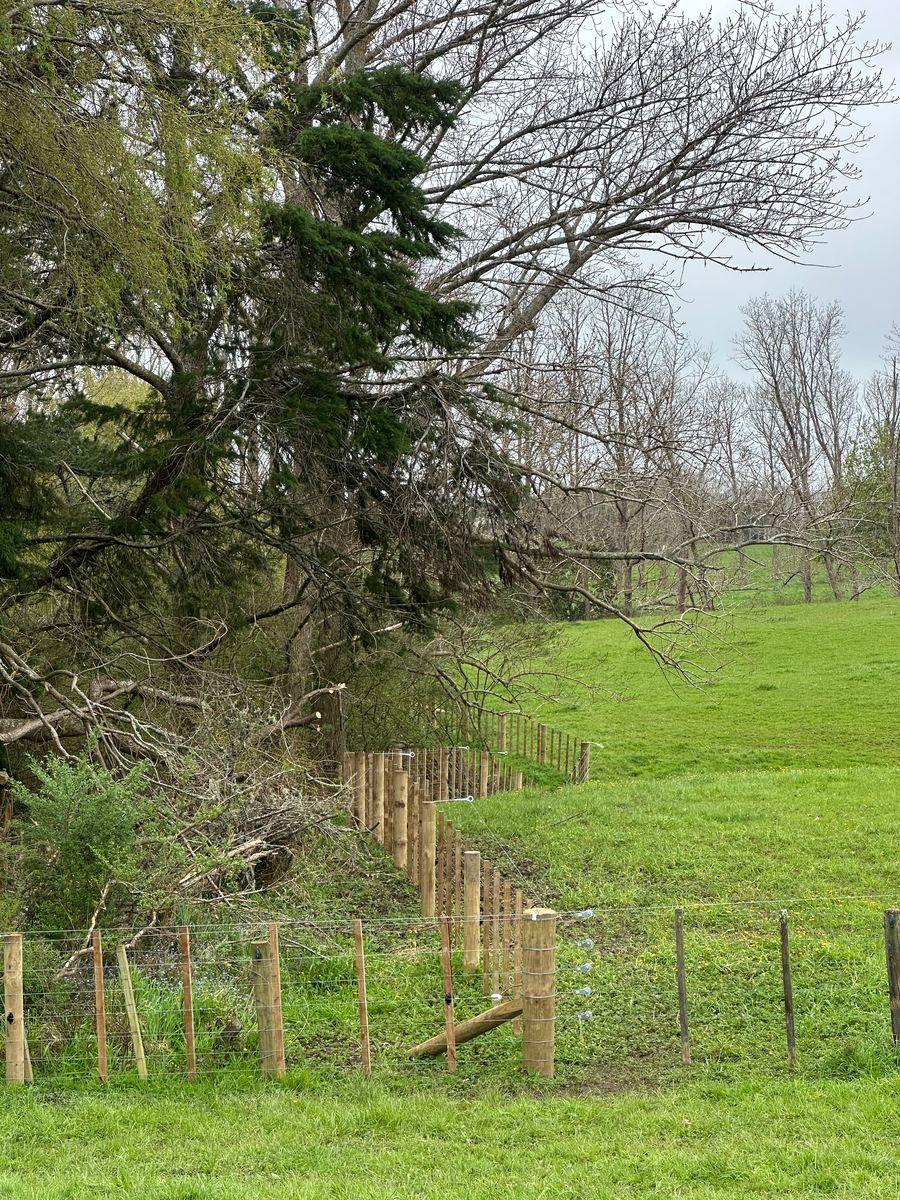
Did very well in poor weather and not-so-great access, recommended.
What sets the cost of deer fencing
- Metres of netting, and its height
- Slope and bush, and how your line is reached
- Strainers and corners
- Gates through a deer fence
- Old fence to replace or tie into
Deer fence questions
Something else on your mind? Ring 0800 211 405, or put it in the message on the form.
Can you fence deer on steep hill country?
Yes. Netting goes up steep faces and through gullies. We walk your line before quoting so strainers and corners sit where they’ll hold.
Can netting go on an existing fence?
Yes. Netting can go on existing posts that are sound and tall enough to carry it. If they aren’t, we’ll say so on the walk-through and price new posts.
Do you hang gates in deer fences?
Yes. Gates in a deer fence are hung tall, with any gap underneath kept small so deer can’t push under.
Other fencing we do
- Stock and cattle yardsHolding pens and a race, with a loading ramp at truck height.
- Post and wire, wire and battenBoundaries and paddock lines strained tight to hold stock.
- Post and railRails for horse paddocks and arenas on blocks and studs.
- Stream and riparian fencingStock off streams and planting in, on wet ground.
- Electric fencingPermanent hot-wire fences, and live wires added to old ones.
- Farm gates and stilesGateways that swing clear. Stiles and entranceways too.
- WindbreaksShelter cloth on tall posts for growers and orchards.
Get your deer fence priced
Start with the job and what it has to hold. We’ll come and walk it.
Handy to mention
- What’s going in, and what it has to hold
- Rough metres, or the paddocks it runs round
- The ground: flat, rolling, steep or wet
- Gates, stiles or a loading ramp
- How a truck and tractor reach your line
- Photos of your line or old fence
We get back to you, then Dylan comes out to walk your line with you and price it. Your quote is free and itemised, so you can see what each part costs.
Rather talk it through? Ring 0800 211 405
Got it. Thanks.
Dylan will be in touch about the job and a time to walk the line with you.