
Riparian Fencing for Franklin Streams
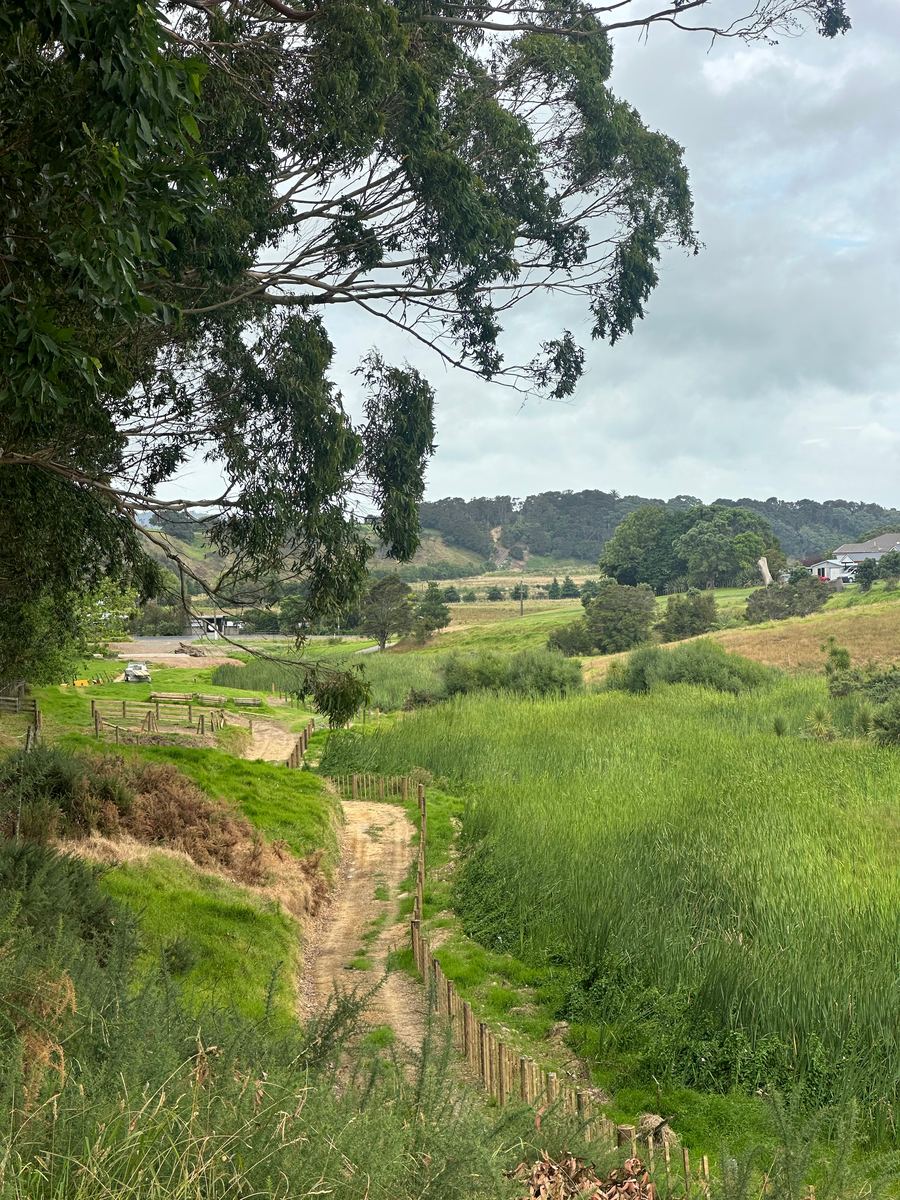
Fencing stock off streams, gullies and wet ground so your planting can go in. Built on swampy ground, with stiles and gates where you need to get across.
- Farm fencing contractor
- Yards, rail, wire and netting
- Since 2021
- Family owned
- Pukekohe-based
- Franklin and North Waikato
- Free quotes
- Line walked first
 Planting · stream fencing
What to tell us about your stream fencing
- Rough metres of bank, one side or both
- What stock graze beside it
- When your planting is booked
- Photos of your stream and wet patches
Fencing off the stream
A stream through your bottom paddock is where cattle stand in summer and where banks slump in winter. Fencing it off keeps stock out of the water and gives its margin a chance to grow back.
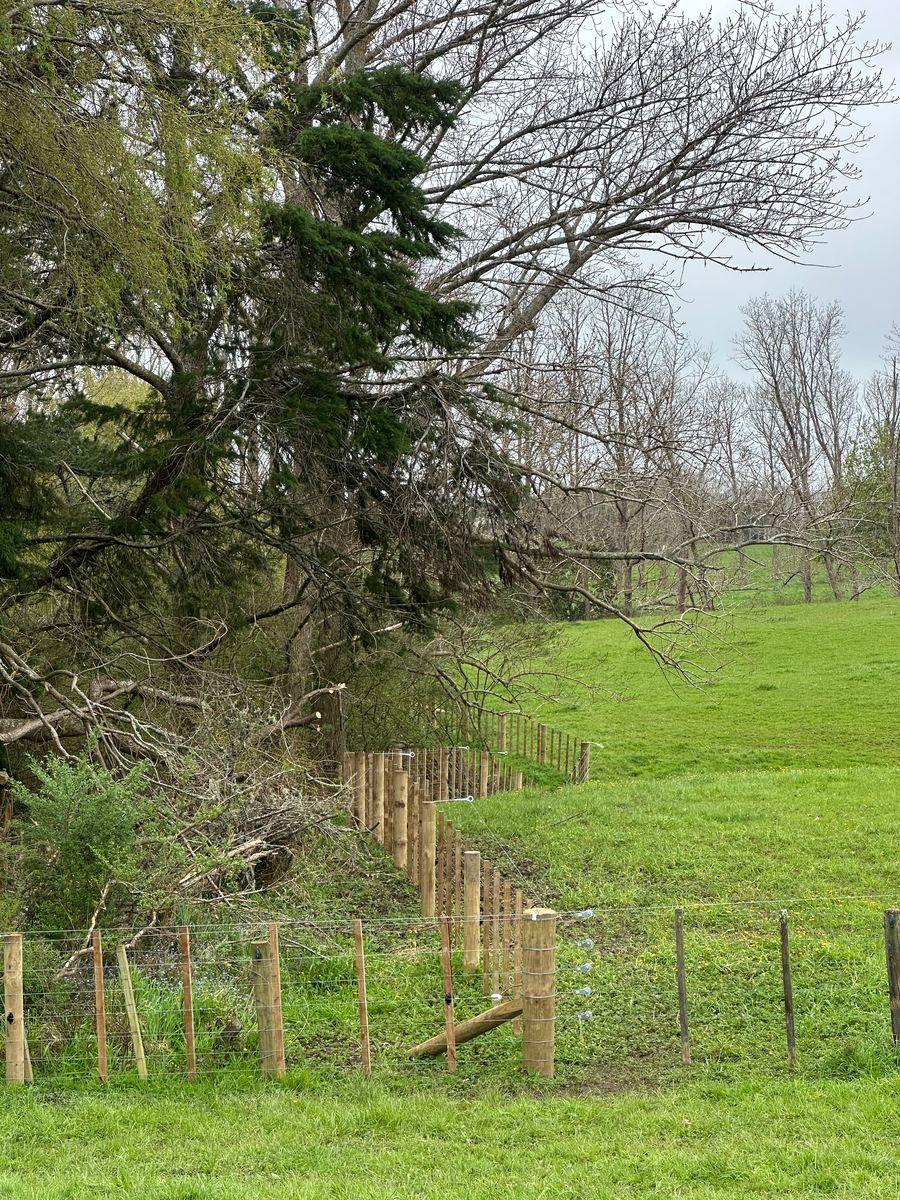
We fence streams, gullies, wetland edges and dispersal fields, set back from each bank far enough to plant. Gates and stiles go in where you still need to cross or get a mower through.
Wet ground and swampy bits
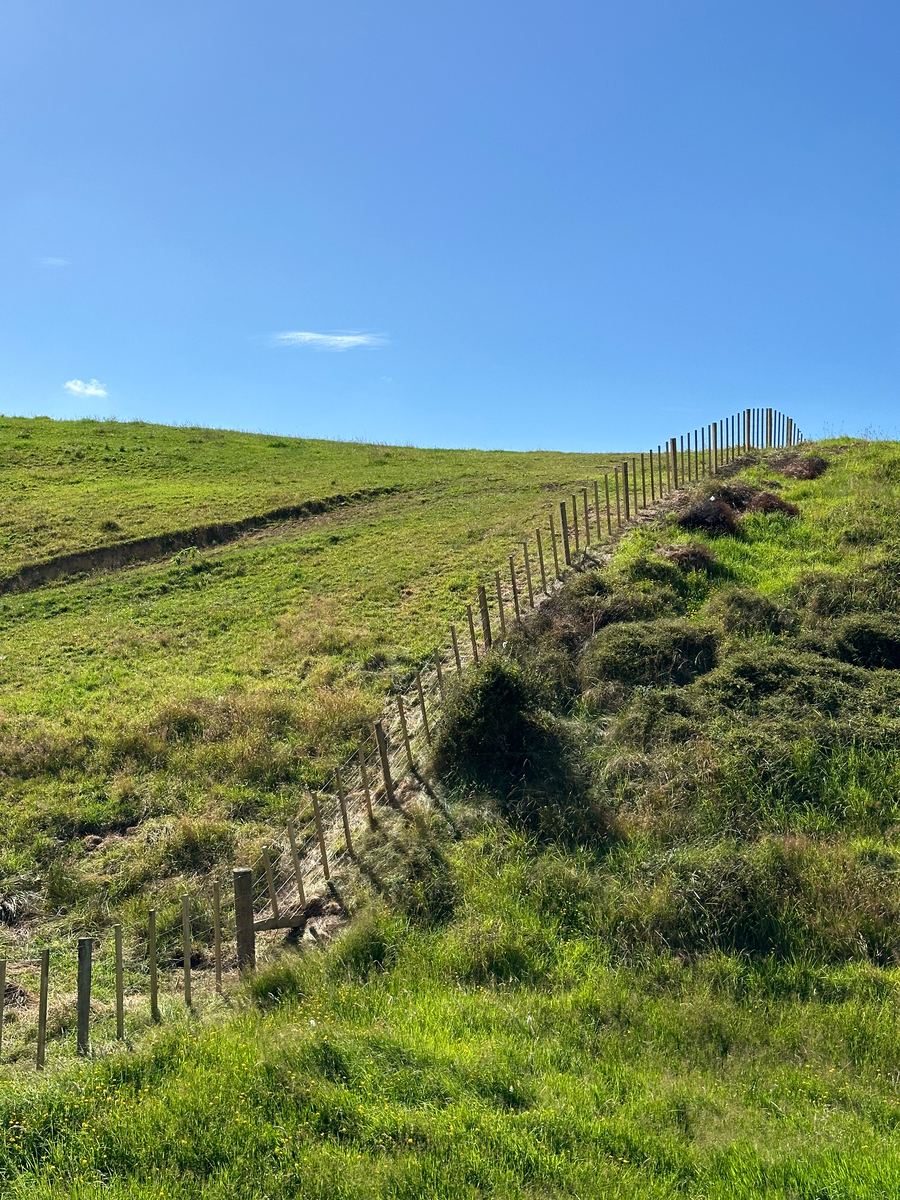
Stream margins are a farm’s wettest ground, and a fence there has to stand through a winter of soft ground. We pick a line where strainers sit on the firmest ground going and your fence skirts the worst of the swamp.
Planting season sets your deadline. Fencing has to be finished before plants go in, so tell us when your planting is booked.
The stock rules for streams
National stock exclusion rules cover beef cattle, dairy cattle, dairy support cattle, deer and pigs. Sheep and horses aren’t covered. Where a river or stream bed is wider than 1 m anywhere on a property, stock under those rules have to be kept at least 3 m back from the edge of its bed.
Dairy cattle and pigs have had to stay out of lakes and wide rivers on any terrain since 1 July 2023, and dairy support cattle since 1 July 2025. Beef cattle and deer are covered when they’re intensively grazed: break feeding, grazing a forage crop, or grazing pasture irrigated in the last 12 months.
Stock crossing a stream use a bridge or culvert unless they’re supervised and actively driven across, no more than twice in a month. Low-slope rules for beef cattle and deer were revoked in October 2024, and a stricter regional rule wins where there is one.
Auckland side or Waikato side
On Auckland Council’s side, the Unitary Plan has its own livestock rule for production land carrying 18 or more stock units a hectare, covering streams, rivers, lakes and wetlands. A permanent fence or a temporary hot wire are both allowed ways to keep stock out.
North Waikato farms are under national rules plus Waikato Regional Council’s own plan, so check with that council for your property. Some rural addresses with a Waiuku postal address lie in Waikato District rather than Auckland, to the south and west of town.
Council funding for stream fencing
Auckland Council’s Waterway Protection Fund has paid up to 50% of costs for stock-exclusion fencing, alternative stock water and native planting on rural properties over 5 hectares. Its fence standard is wooden posts with two electric wires, set back an average of at least 5 m from the stream.
That fund runs in rounds. Round two of 2026/27 ran from 8 to 29 September 2026 and has closed, so ask council when the next one opens. Mauku Stream, Whangamaire Stream and Pukekohe-Tutaenui Stream are among this year’s Franklin priority catchments.
If you’re applying, we build to that fence standard and give you an itemised quote to go with your application.
What the customer said
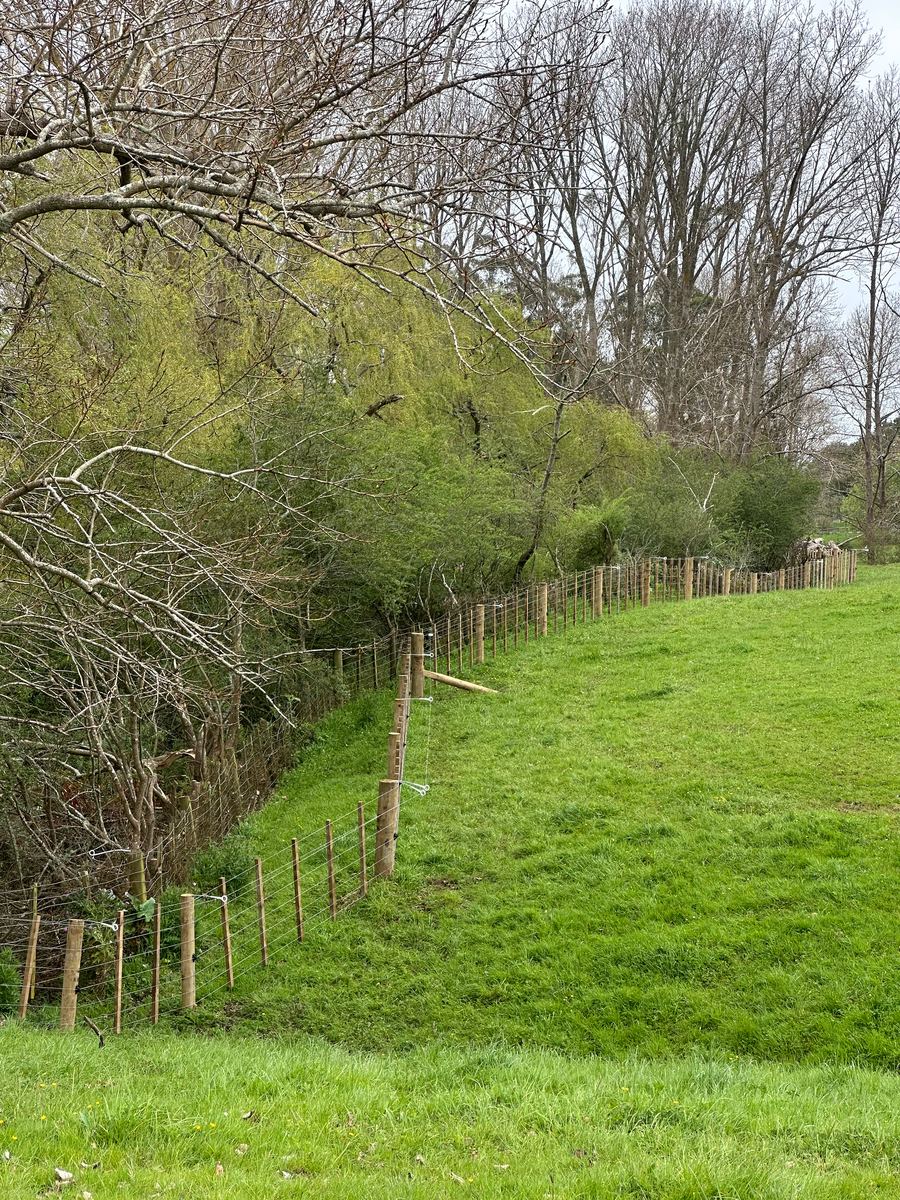
Dylan was able to attend at short notice for fence repairs, and to fence off stream and dispersal field areas ready for planting. He has excellent problem solving ability like swampy ground and was unfazed by additional work like stiles and gates. He got stuck in and got us out of a hole to get our planting in in the current planting season. I highly recommend him to anyone in need of work on their rural properties. First rate guy.
What sets the cost of stream fencing
- Metres of bank, and one side or both
- How far back from each bank your fence sits
- Post and batten, or posts with hot wires
- Soft, wet or swampy ground
- Stiles, gates and water crossings
- Tractor access along the margin
Stream fencing questions
Something else on your mind? Ring 0800 211 405, or put it in the message on the form.
Do sheep and horses have to be fenced off streams?
Not under national stock exclusion rules, which cover cattle, deer and pigs. Keeping any stock off a planted margin still takes a fence.
How far back from a stream does my fence go?
National rules ask for at least 3 m from the edge of a stream bed for stock they cover. Auckland’s Waterway Protection Fund looks for an average of 5 m or more. If you’re planting your margin, leave room for plants.
Will council pay for my stream fencing?
Auckland Council’s fund has covered up to 50% on eligible rural properties, but it runs in rounds and council assesses each application. We can price your fence to that standard for your application.
Can you put stiles and gates in a stream fence?
Yes. Stiles where you need to walk across, and gates where a mower or ute needs through.
Other fencing we do
- Stock and cattle yardsHolding pens and a race, with a loading ramp at truck height.
- Post and wire, wire and battenBoundaries and paddock lines strained tight to hold stock.
- Post and railRails for horse paddocks and arenas on blocks and studs.
- Electric fencingPermanent hot-wire fences, and live wires added to old ones.
- Deer fencingNetting on tall posts that holds on steep faces and through bush.
- Farm gates and stilesGateways that swing clear. Stiles and entranceways too.
- WindbreaksShelter cloth on tall posts for growers and orchards.
Get your stream fencing priced
Start with the job and what it has to hold. We’ll come and walk it.
Handy to mention
- What’s going in, and what it has to hold
- Rough metres, or the paddocks it runs round
- The ground: flat, rolling, steep or wet
- Gates, stiles or a loading ramp
- How a truck and tractor reach your line
- Photos of your line or old fence
We get back to you, then Dylan comes out to walk your line with you and price it. Your quote is free and itemised, so you can see what each part costs.
Rather talk it through? Ring 0800 211 405
Got it. Thanks.
Dylan will be in touch about the job and a time to walk the line with you.